Challenge
Validate the CEO's vision for a social media app tailored to artists, ensuring it would foster vibrant, safe communities for networking, critiques, and creative growth while providing secure spaces for minors.
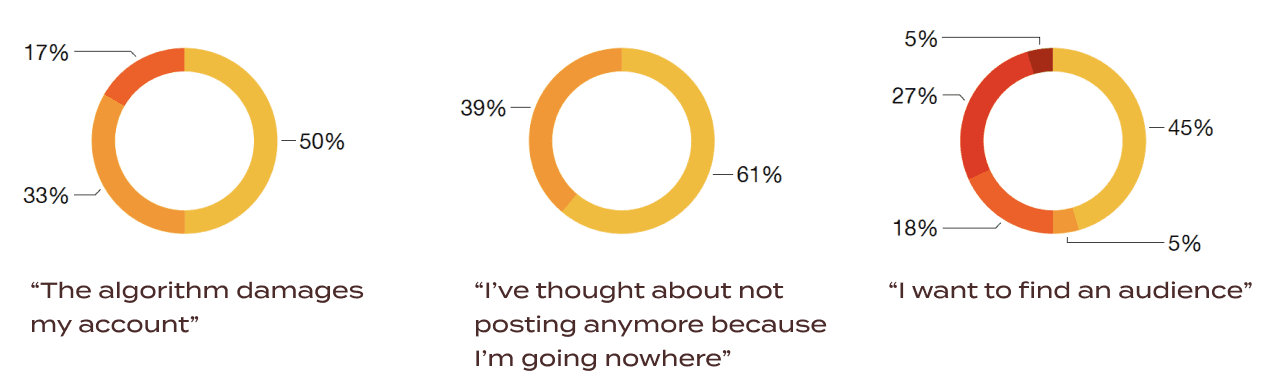
"I've thought about not posting anymore because I'm going nowhere"
-Ellie, 22 year old artist
A Visionary's Dream
Our CEO, an artist herself, envisioned a solution: a social media app designed exclusively for artists, where they could safely share their work, network, and grow. She wanted to ensure that the app would cater to artists' specific needs and provide a secure space for minors.
Once upon a time…
In an era of digital connectedness, artists were struggling. Platforms that once allowed them to share their art and connect with like-minded individuals had become hostile environments, riddled with cyberbullying, blackmail, and other threats. The anonymity that the internet offered was a double-edged sword, destroying the very art communities it helped create.
The Artists’ Struggle
Artists found themselves with no dedicated platform to share their work, receive constructive feedback, and form meaningful connections. While many turned to Instagram, recent updates rendered their art nearly invisible, fueling anxiety and negative thoughts about their future.
a social media app for artists
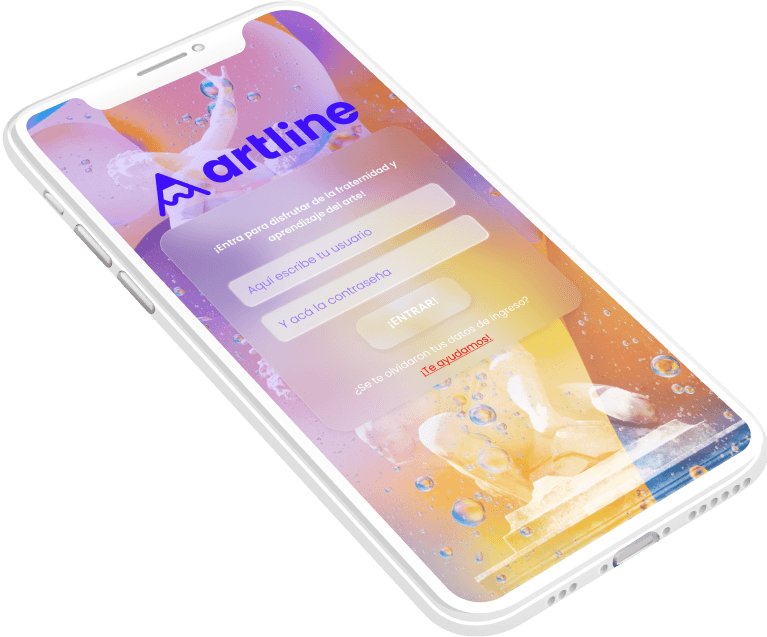
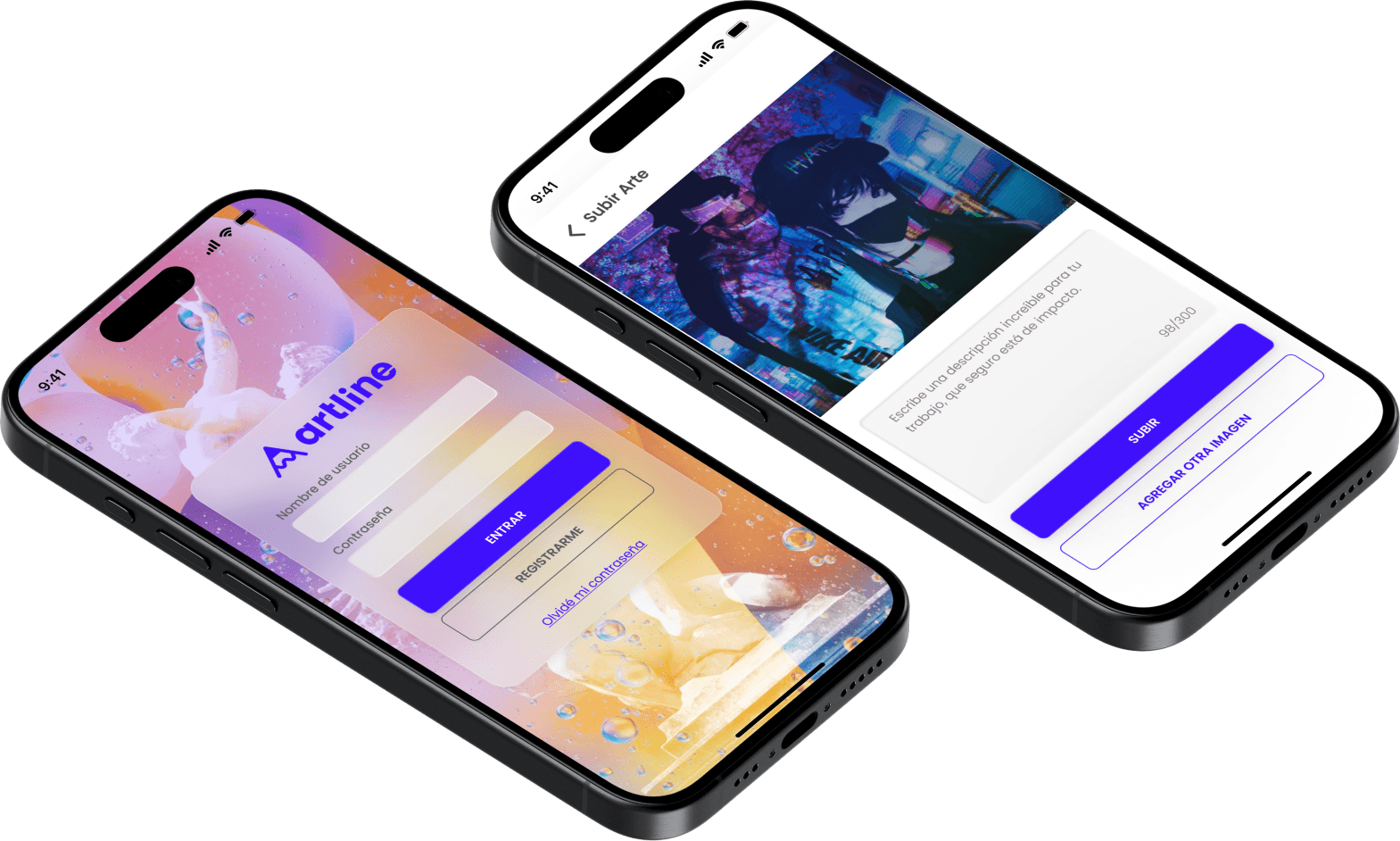
Artline revolutionizes social media for artists, fostering safe, joyful communities for networking, critiquing, and creative growth.
Role:
Lead UX/UI designer + Researcher

Validating the Vision
I was tasked with validating this vision and bringing it to life. We began by investigating whether the business's perceived issues were genuine concerns for the users. Creating a proto persona, we surveyed artists from various platforms. The results confirmed our hypothesis: artists were indeed yearning for a dedicated platform to publish their art and build audiences.
With this data, we refined our proto persona into a detailed user persona and mapped her current user journey. To fully understand the unspoken needs of our users, I conducted 1-on-1 interviews and contextual interviews, filling out an empathy map to capture their emotions and reactions.
Survey Results
I crafted and applied these surveys to art creators on social media with varying audience sizes with the intent of validating our hypothesis. 61% of them mentioned they had thought about stopping their art career online because they felt they were going nowhere, and 50% of them were willing to start anew in a different platform because they thought the algorithm in their current platform damaged their account's findability.
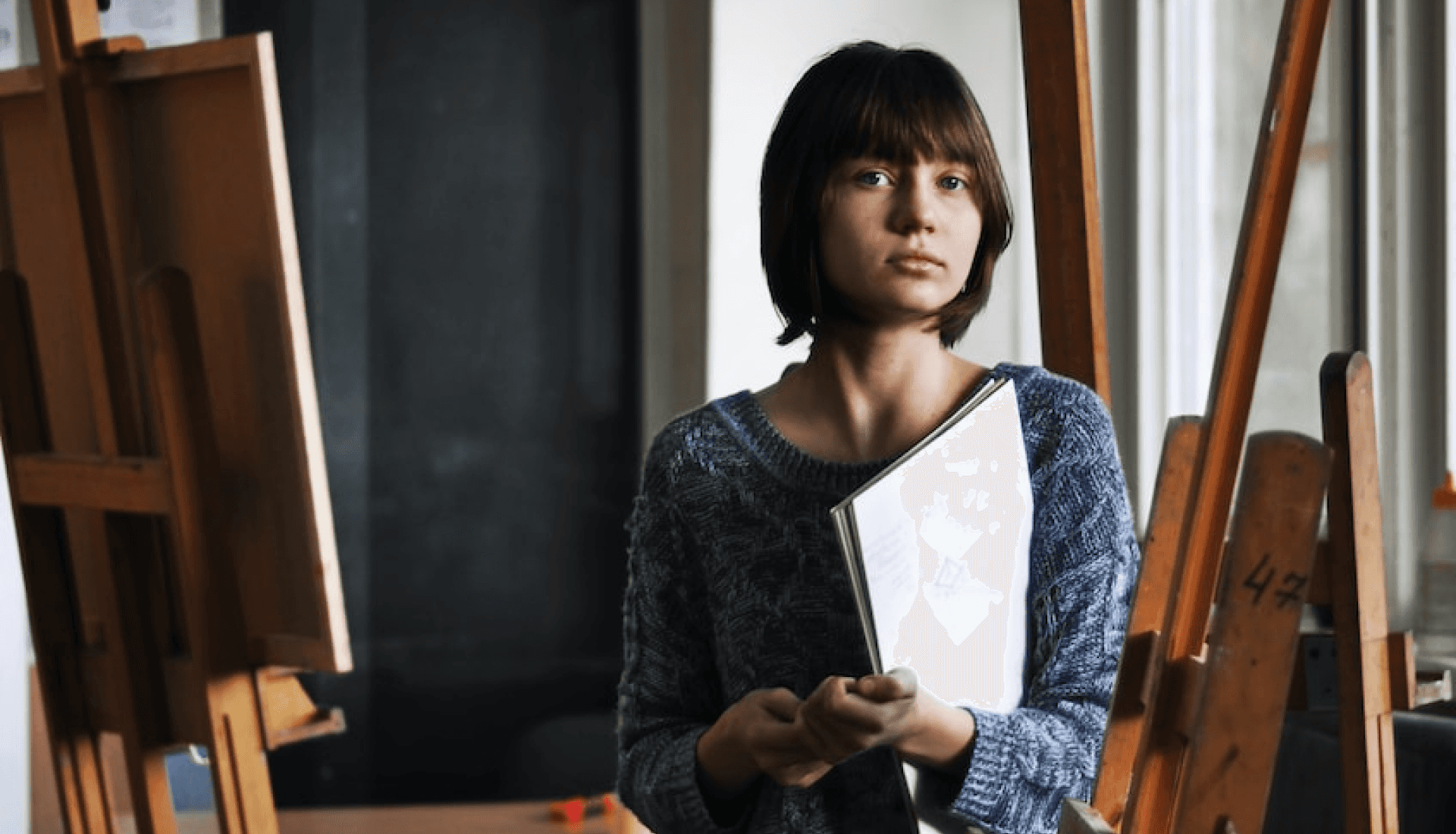
Artistic Amanda
18 years old
Student
Lives with her family
Bio
A sweet and sympathic girl whose hobby is creating art. She wants to do it for a living, but she doesn’t consider herself to be “at the level”.
She has anxiety issues and is an introvert, but loves making friends and talking.
Get followers online so she can be a popular artist
Making artist friends who can critique her art and give her advice.
Participating in fun contests and challenges to grow as an artist
To be able to customize her profile to make it look more like her.
Uses Instagram to upload her art, but the changing algorithm makes it hard to reach new audiences and it tires her.
Used to use other platforms such as Tumblr and DeviantArt but deems it now “dead” since the userbase has lowered considerably and she can’t interact as much anymore.
Thinks Instagram’s interface is boring and even “robotic”
Thinks security should be improved to protect minors from cyberbullying, since she was bullied due to her likings.
Uses other portfolio platforms such as Behance and ArtStation but feels like they’re too work related and doesn’t enjoy them as much.
Hates that Instagram only allows pictures in square format and doesn’t allow writing, music or other art types.
Wants & needs
Frustrations
User Persona
To create a user persona that would later inform our design decisions, I first coordinated and led a focus group with 8 different users, this aided in finding out about how the users interacted as part of a community. Then I conducted 1-on-1 interviews with 5 users, diving deeper in concepts such as individuaunderstand their motivations and frustrations, while uncovering the importance of community for our target, explore the general feedback of the group and try to uncover patterns. All this data served to inform the following User Journey
Wants to post her art to get an audience, and meet other artists who share her interests.
The process is not lineal, is circular, and can revert or repeat itself depending on the user.
It’s interesting how the activities related to socializing with other artists make them happier than the ones related to their own art, which seem to cause them anxiety.
Uploading art in various formats
Creating a community for her and her art, and being part of other communities.
Sharing her and other artists’ art
Scenario
Insights and opportunities
Posting
Browsing
Interacting
Sharing
Expectations
Today I’m uploading some art!
It’s time! I waited three hours, let’s finally post!
I love finding new artists to follow
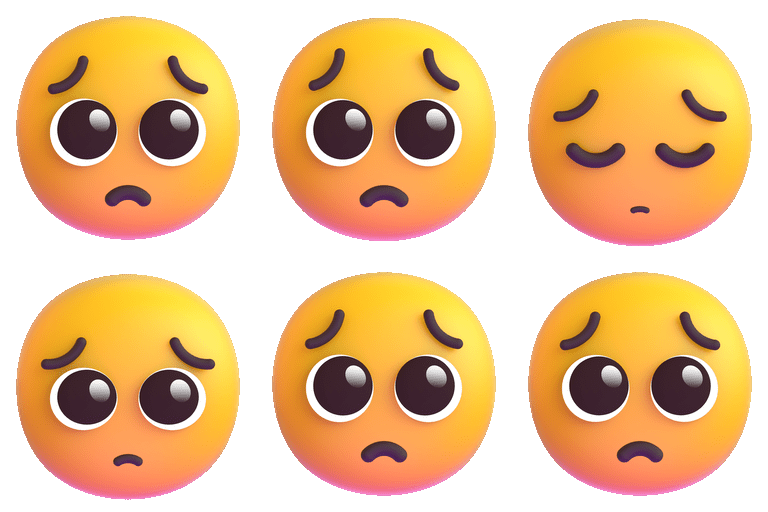
It’s been hours and my post only has 15 likes, what am I doing wrong?
I’ll browse for a bit while I wait to check on my post
What time do my analytics say I should upload?
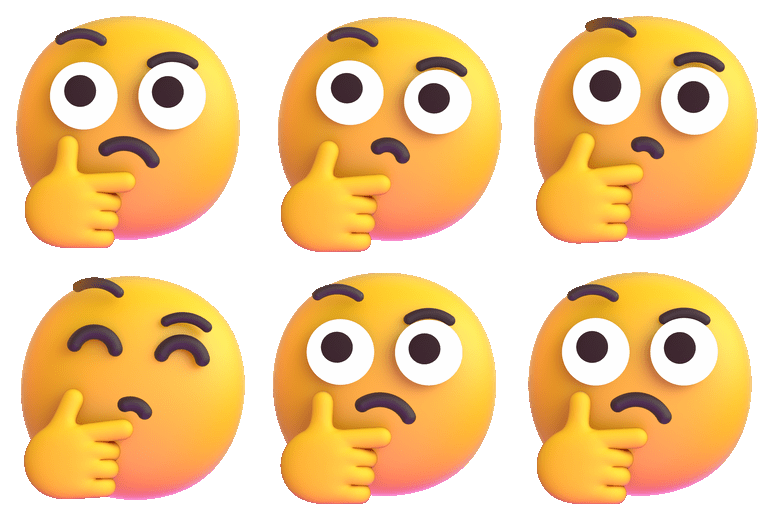

I see more reposters than actual artists
I got a comment! I’ll reply!
They’re friendly! I’ll check their profile
I love their art! I will share it!
I will share my own art, that way maybe my followers will see it?
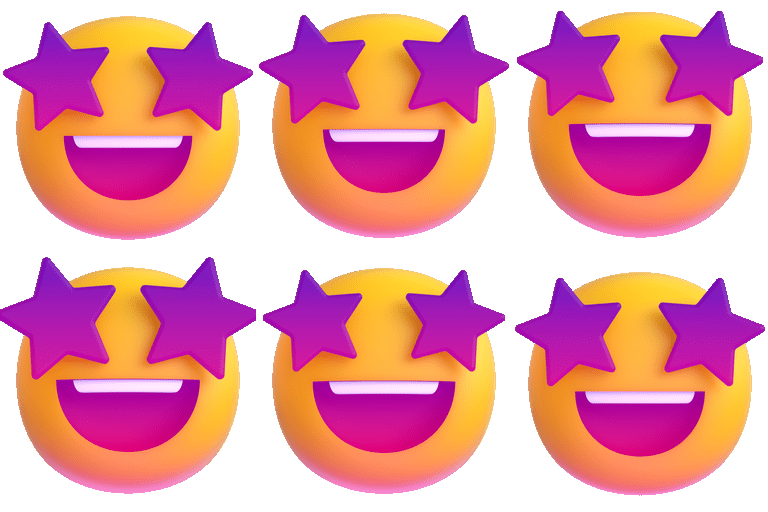
To find an audience to keep growing as an artist.
She can’t do it in Instagram, because she can’t post more often and the constantly changing algorithm doesn’t help.
She needs a new platform.
Artist Amanda, an artist who is looking for a community to grow in, and who is also looking for an audience.
Her follower count doesn’t grow
The algorithm changes
“ All of the art platforms are either dead or are too professional. “
“Instagram is overwhelming, I can’t be 8 hours a day creating, I can’t do all they want me to do to keep growing, I’d definitely try new apps if there were any!”
Reads guides to improve interaction but can’t follow them to the t.
Sometimes she thinks about not posting anymore.
Begins a hiatus every now and then because of exhaustion.
Overwhelmed
Tagging is hard
She wants to keep her art ownership from people she knows in real life.
Hates boring interfaces that don’t reflect who she is
Doesn’t know what to do to get to where she wants to be.
“Algorithms are what make you get stuck”
“Maybe try on Tiktok”
Loves communities
Likes sharing and saving her favorite posts
Needs
Who am I empathizing with?
Sees
Says
Does
Pains
Hears
Gains
Goals
Empathy map
To better understand our persona, I arranged contextual interviews of 5 users. The purpose of this was to see how the user interacted with current platforms used to showcase art. The platforms were selected according to the results of the previous 1-on-1 interviews, as one of the questions asked was "What platforms have you used to publish your art online?".
The results of this contextual interviews helped me build an Empathy Map that would help bring the entire team together into a deeper understanding of our Persona, and begin creating truly user-centered solutions.
In conclusion…
The results confirmed our hypothesis: artists were indeed yearning for a dedicated platform to publish their art and build audiences.
Defining the
core needs
Community
Users mention the need to either create a community for themselves or a topic of their interest to be able to get positive criticism on their art, participate in challenges or events and make friends with people of similar interests.
Organization
Another important pain point for the users is the need for organization with their own posts on their profiles.
Customization
Users want to be able to customize their spaces, either due to nostalgia for old interfaces or simply to be able to showcase themselves.
Sharing
Users want to be able to support people they look up to by sharing others' artwork in their profiles.
From Ideation to Creation
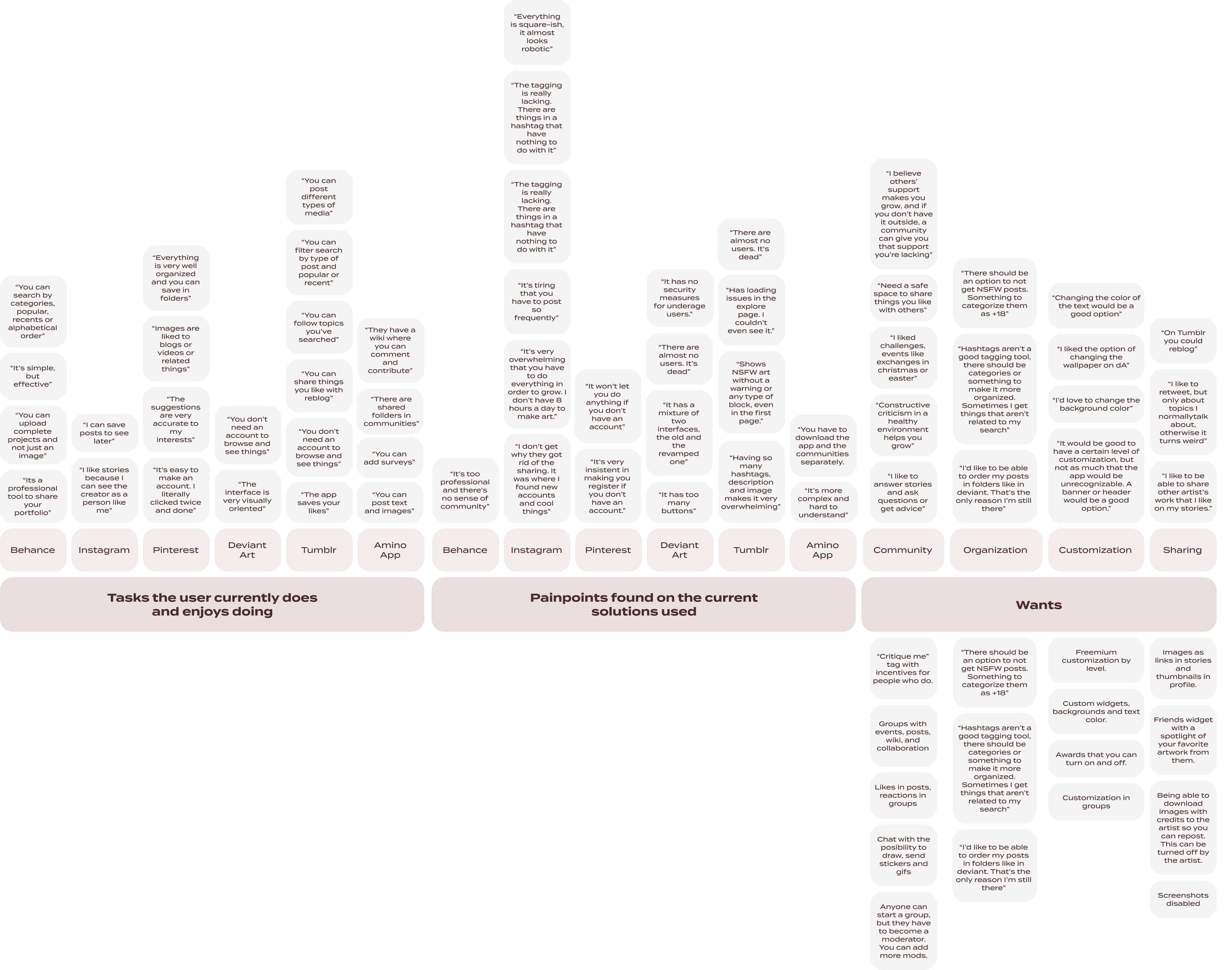
Our team engaged in structured ideation sessions, brainstorming solutions to meet these core needs. We incorporated these ideas into a mental model diagram to be able to understand the differences between the current situation and our ideal solution, we dug deep in the "Wants" tower, to further grasp how we could bring value to the user.
Designing Artline’s Unique Experience
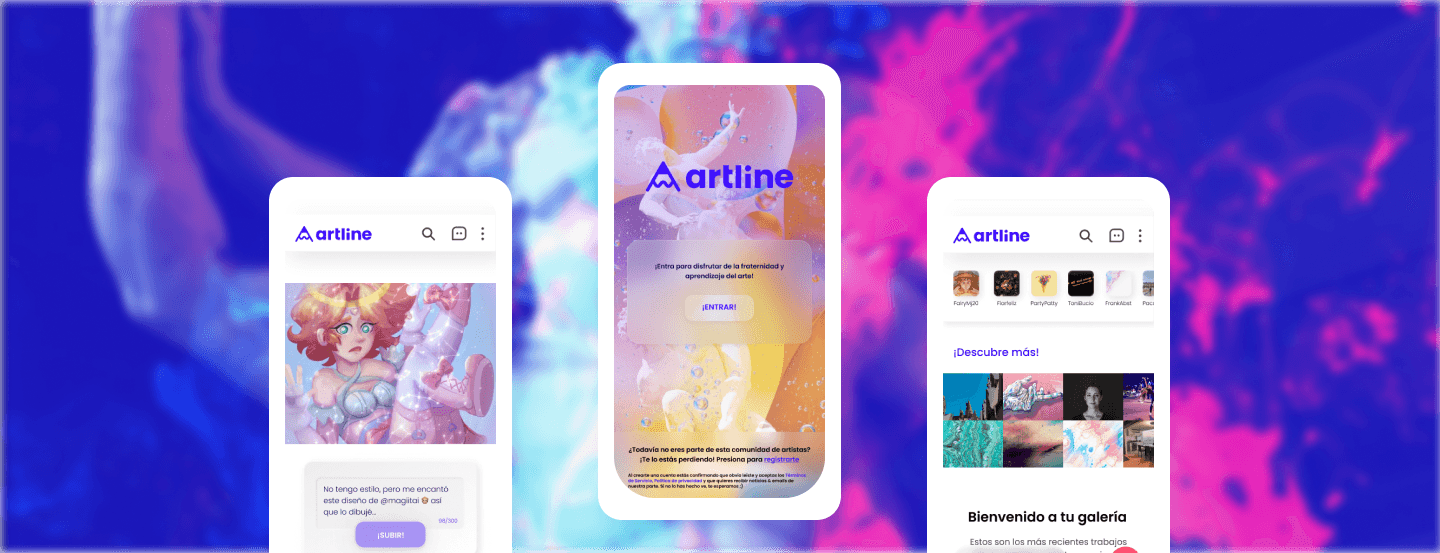
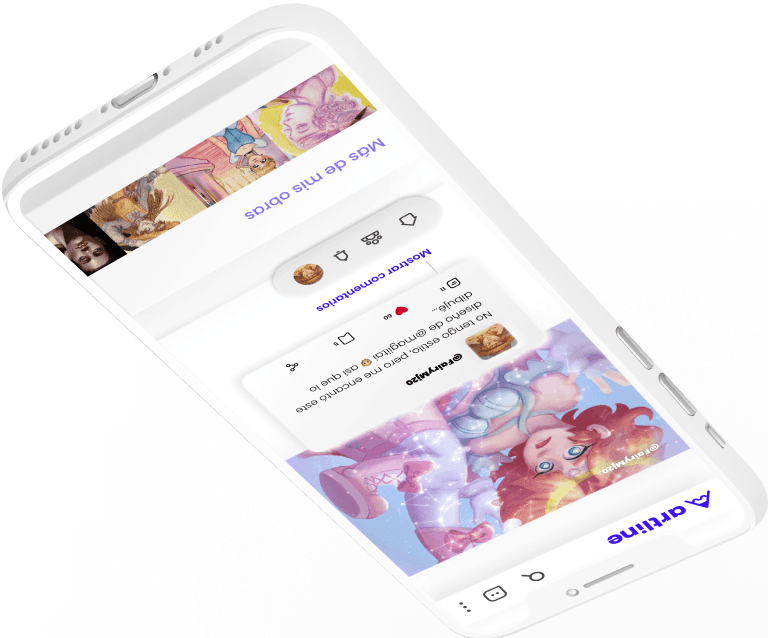
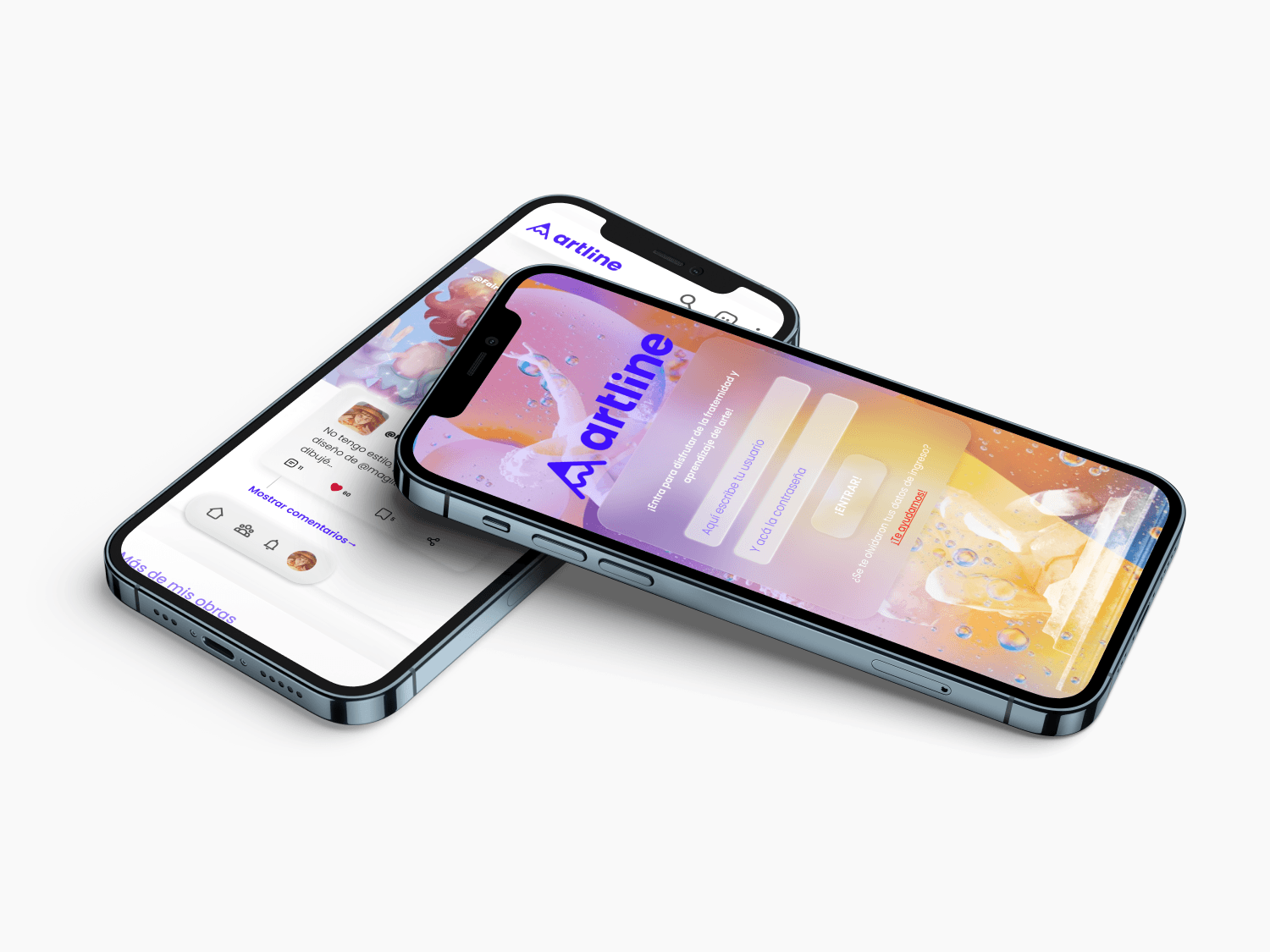
We designed Artline with a clean, bold, and modern look, appealing to our young audience while ensuring ease of use. Public spaces like the discover screen and posting art flow screens maintained a minimalist aesthetic, whereas user profiles offered various customization options.
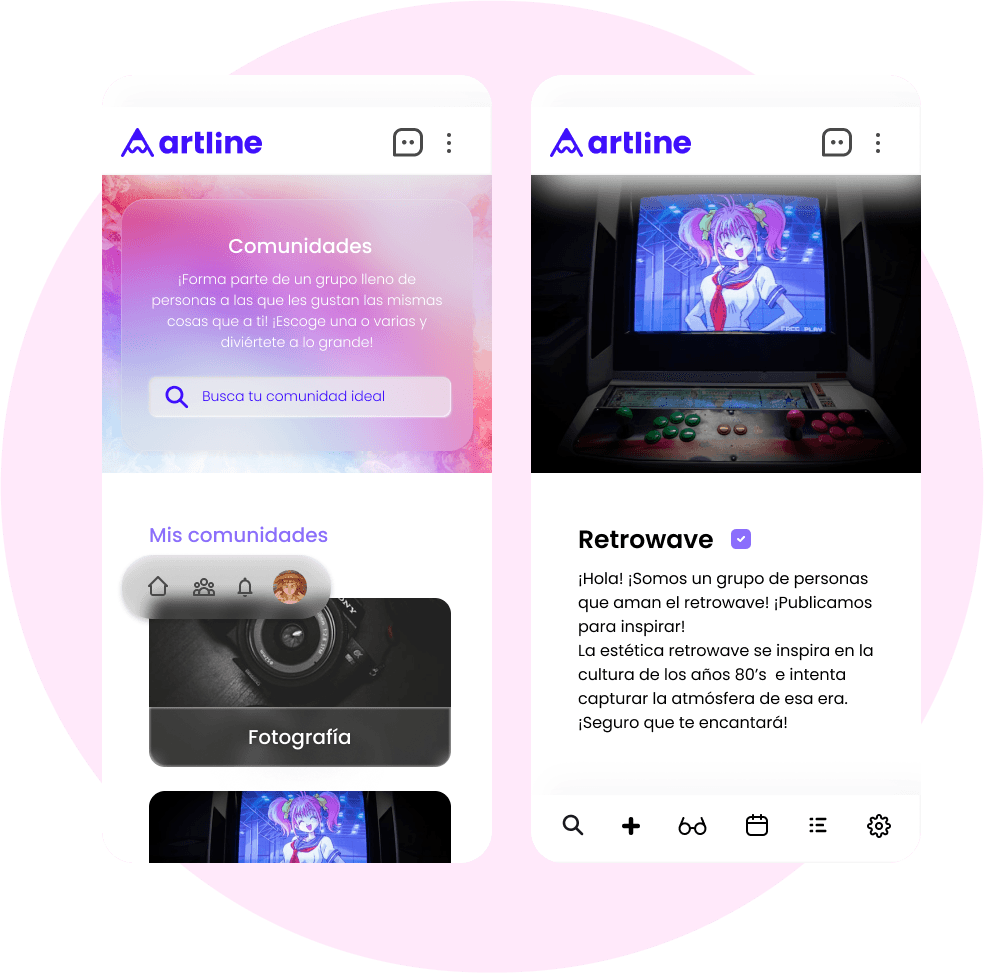
Building communities
Users could join or create communities, organize events, critique artworks, and add articles to a wiki, fostering a sense of belonging and collaboration.
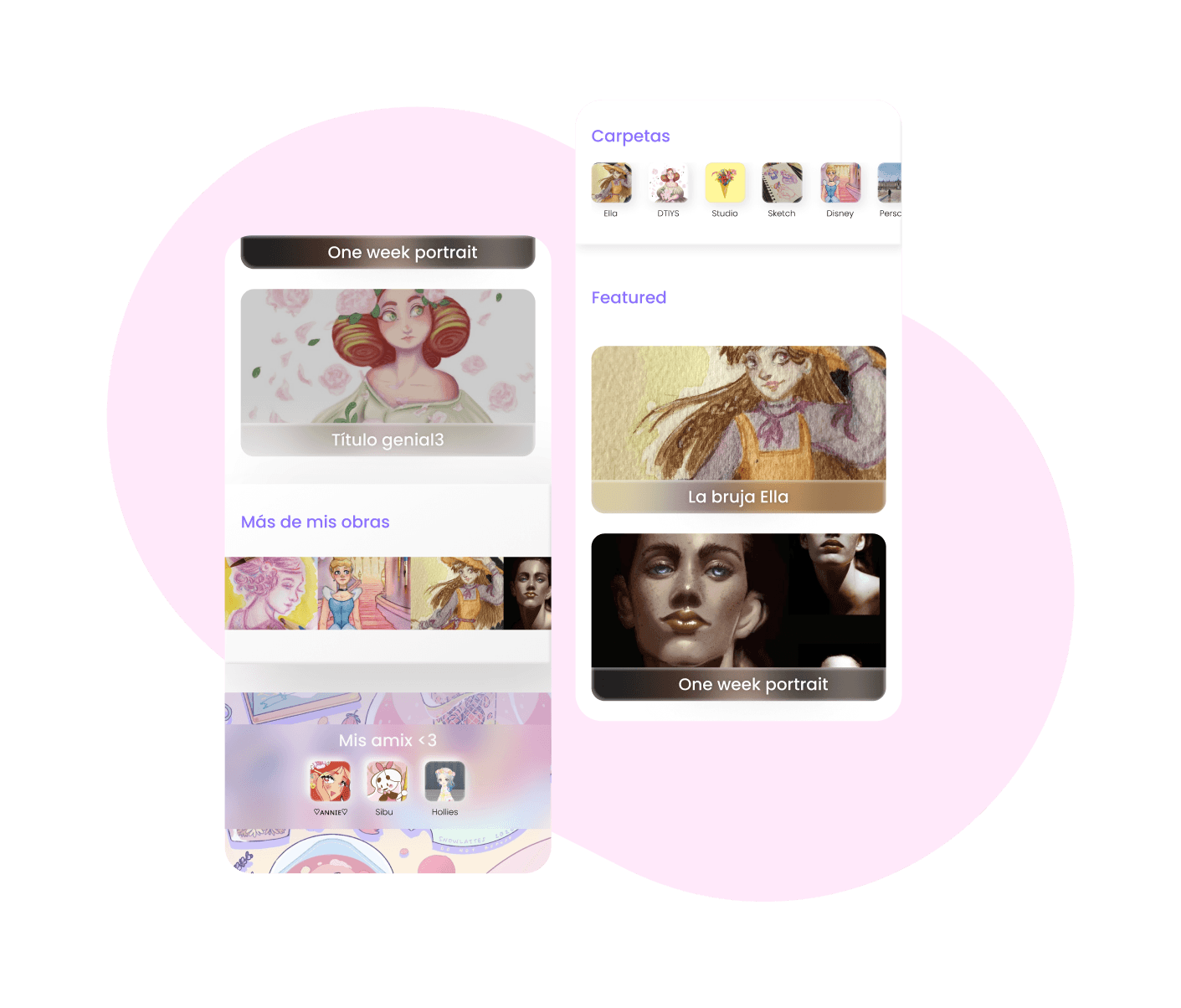
Enhanced Organization
Artists could categorize their posts into collections and folders, arranging them with widgets on their profiles, ensuring their work was easily accessible and beautifully displayed.
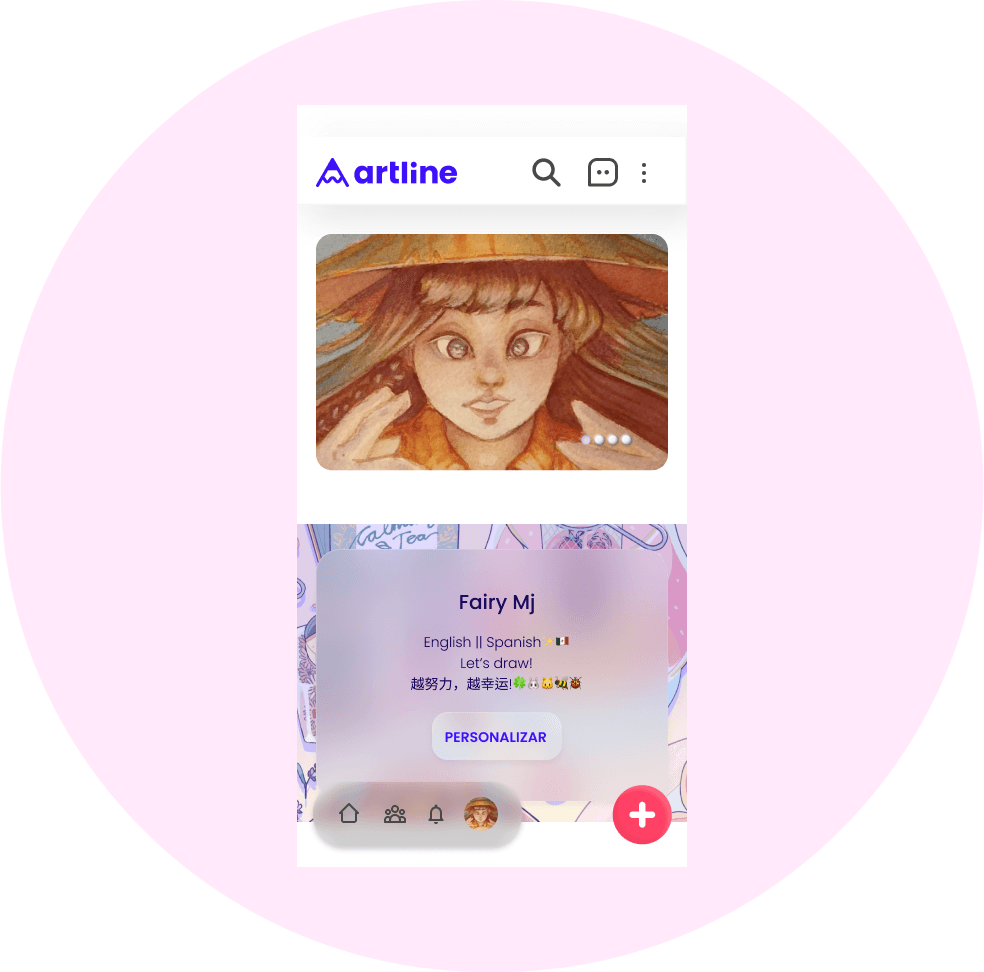
Personalized Customization
Depending on their subscription level, users could personalize their profiles with custom backgrounds, multiple profile pictures, and various widgets, allowing them to showcase their unique style.
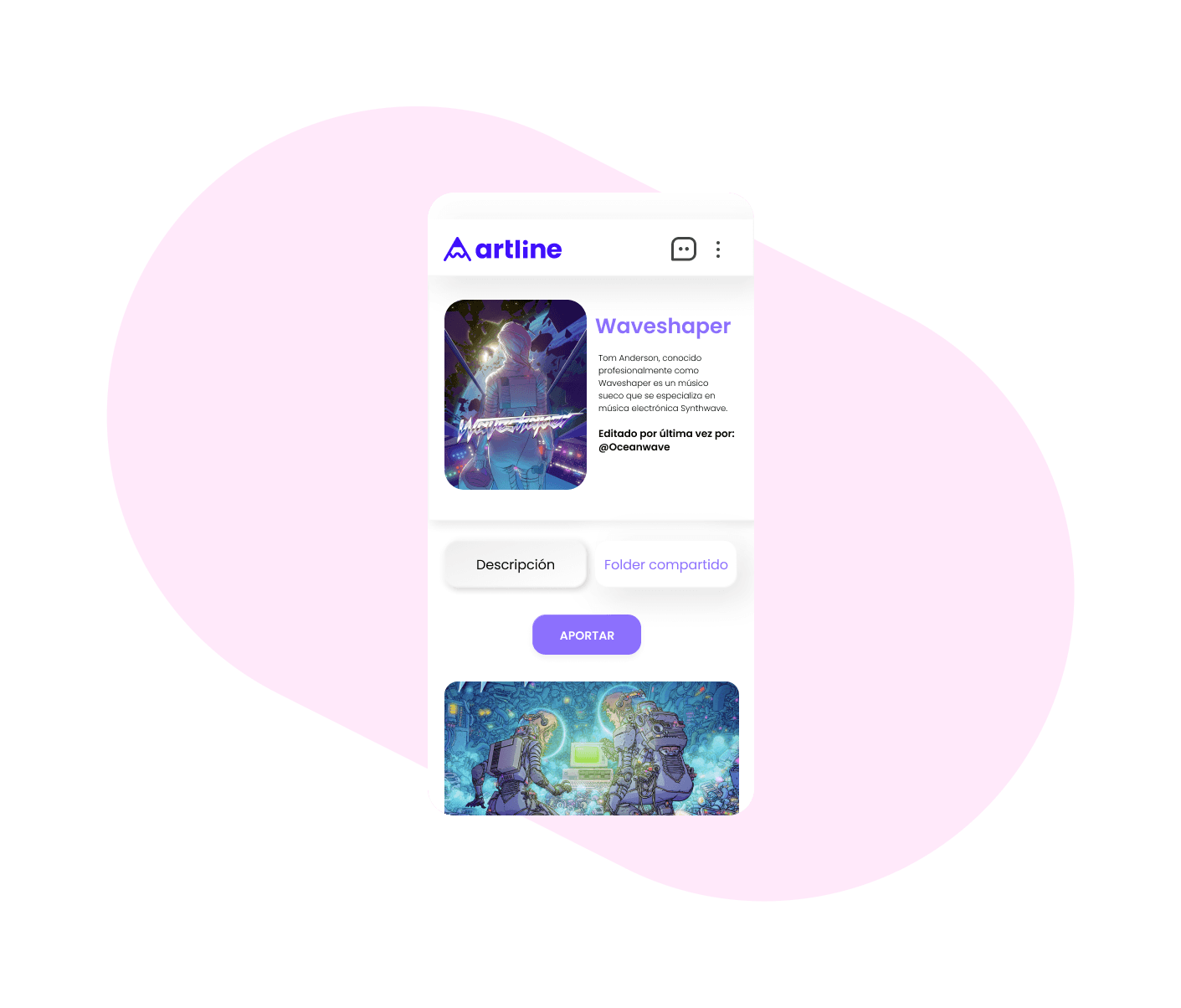
Effortless Sharing
Artists could share their own or others' work through stories, personal messages, community posts, or by pinning them on their profiles. They could also share critiques and awards, supporting and celebrating their peers.
Transformative Results, hurray!
Artline's launch was a resounding success. User engagement soared, with artists praising the platform for its vibrant, supportive community and intuitive design. Minors' participation was high, thanks to the secure spaces and content moderation. We wish! Artline solves a real-world problem and has much potential to grow, but first we have to tackle the results shown in the testing: Having issues with the accessibility.
If you want to see how I would've done it a few years after my first iteration you can check my LinkedIn

Want to get to know me?